
Event date: 11 Feb 2025, LCC
Words by Yu Feng, Associate Professor (Shanghai) and PGR student (UAL)

On 11th February 2025 the Illustration Studies Hub hosted Whose Vision? Whose Voices? – Refugee Narratives in Communication Design at LCC, an event exploring how migration and displacement are represented in visual communication. Chaired by Dr Nina Mickwitz (LCC), an expert on documentary comics and refugee narratives, the event opened with the concept of the “border spectacle” — Nicholas De Genova’s term for the hyper-visibility of physical borders in media, politics, and public discourse. Dr Mickwitz reminded us that while such visibility is amplified through repeated images of intercepted migrants or queues for processing, it simultaneously conceals the less visible bordering practices that shape people’s everyday lives. In other words, the “refugee images” we see are only the tip of the iceberg. Recognising this dual mechanism of visibility and invisibility, she suggested, is crucial for anyone seeking to tell counter-narratives.
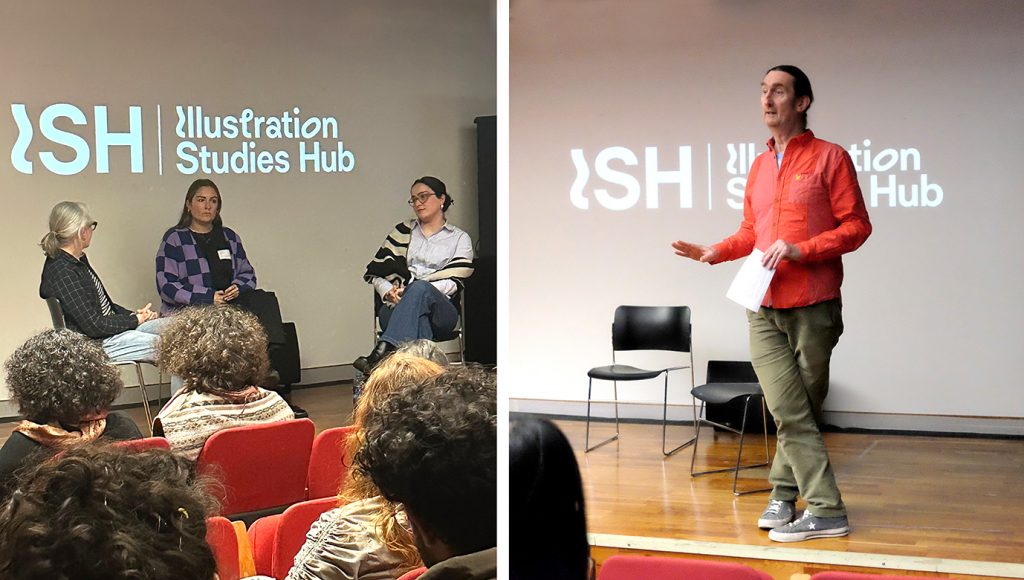
Right: Ian Horton introducing the event
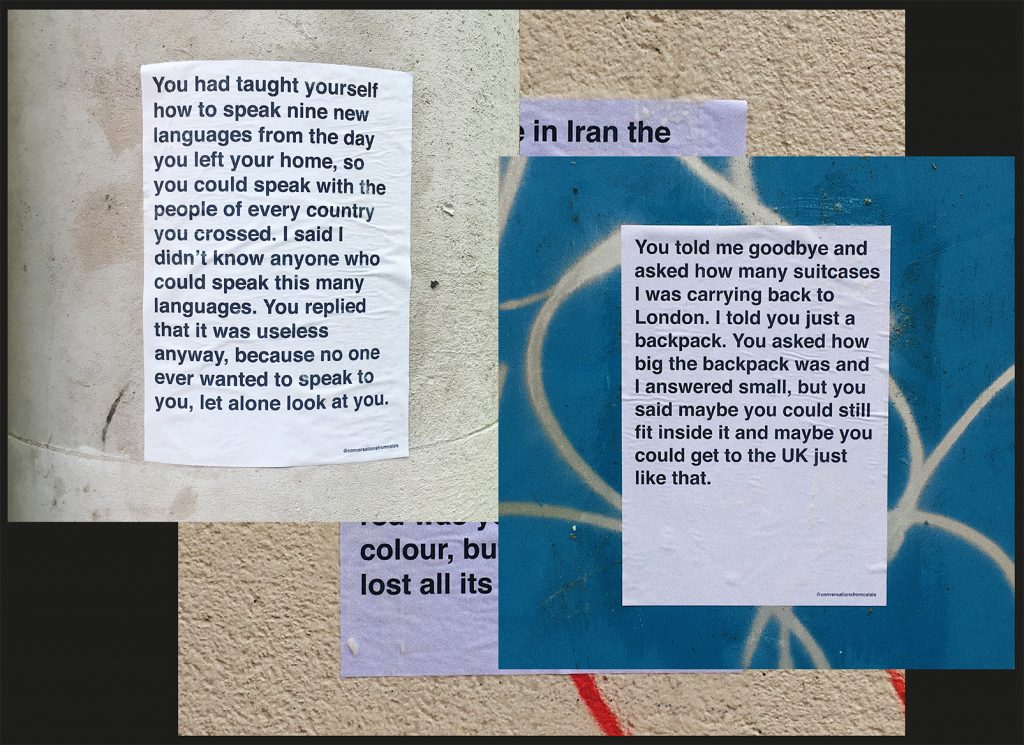
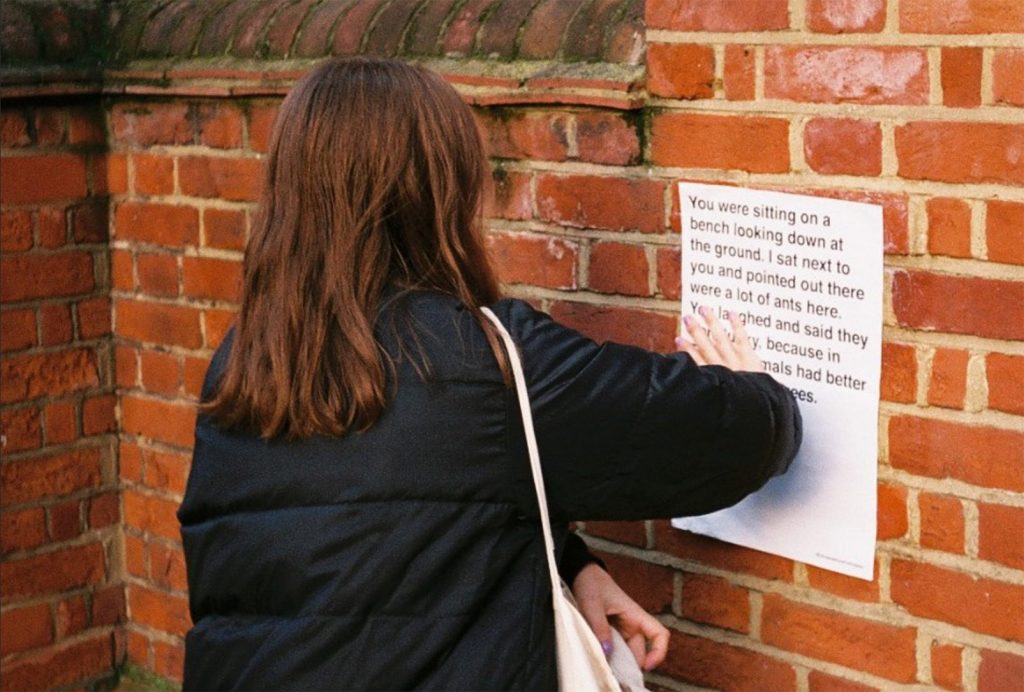
The event featured two practitioners approaching this challenge from distinct perspectives. Mathilda della Torre presented Conversations from Calais, a participatory project born from her time volunteering in one of Europe’s deadliest border zones. Struck by the gap between her personal encounters with displaced people and their dehumanising portrayal in mainstream media, she began transcribing snippets of conversation into simple, text-only posters, avoiding stereotypical imagery, and placing them in public spaces. These human vignettes, rather than grand migration narratives, aimed to rehumanise refugees and integrate their voices into the everyday visual environment. Since being shared online, the project has spread to 68 cities in 12 languages and now includes over 300 conversations.
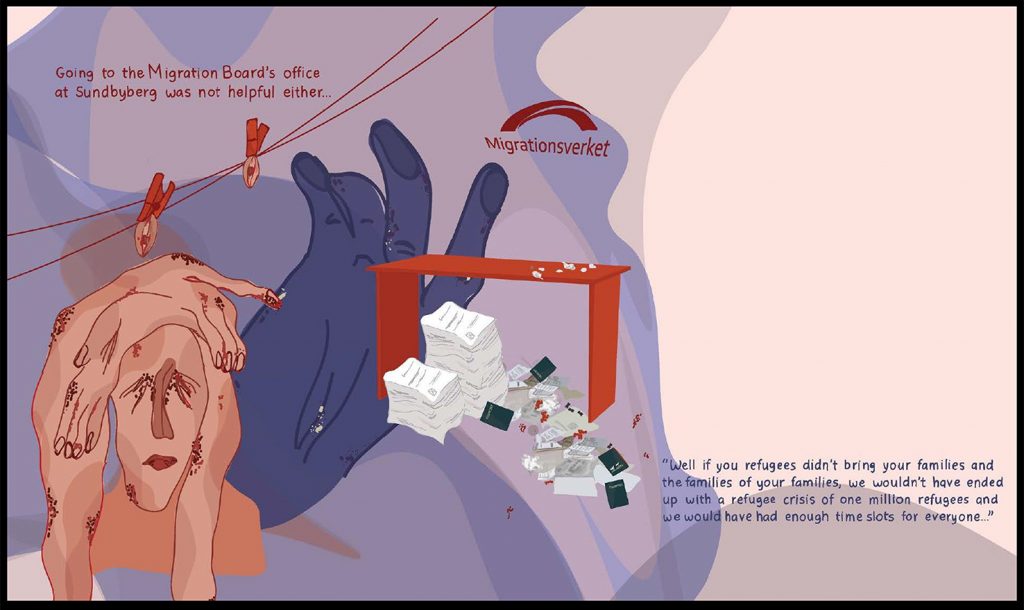
Hayfaa Al-Chalabi discussed her graphic novel Refugees Welcome?, narrating her experience as a child asylum seeker in Sweden alongside others navigating the Scandinavian immigration system. Through illustration, she reflected on her years of uncertainty as an unaccompanied minor, the bureaucratic power imbalances within the Migration Board, and the humiliation she endured. Initially reflecting dominant stereotypes of sadness and vulnerability, she later shifted to an ironic portrayal of the immigration officer who had delivered her final deportation notice, repositioning herself as an observer rather than the passive subject, and thereby reclaiming agency.
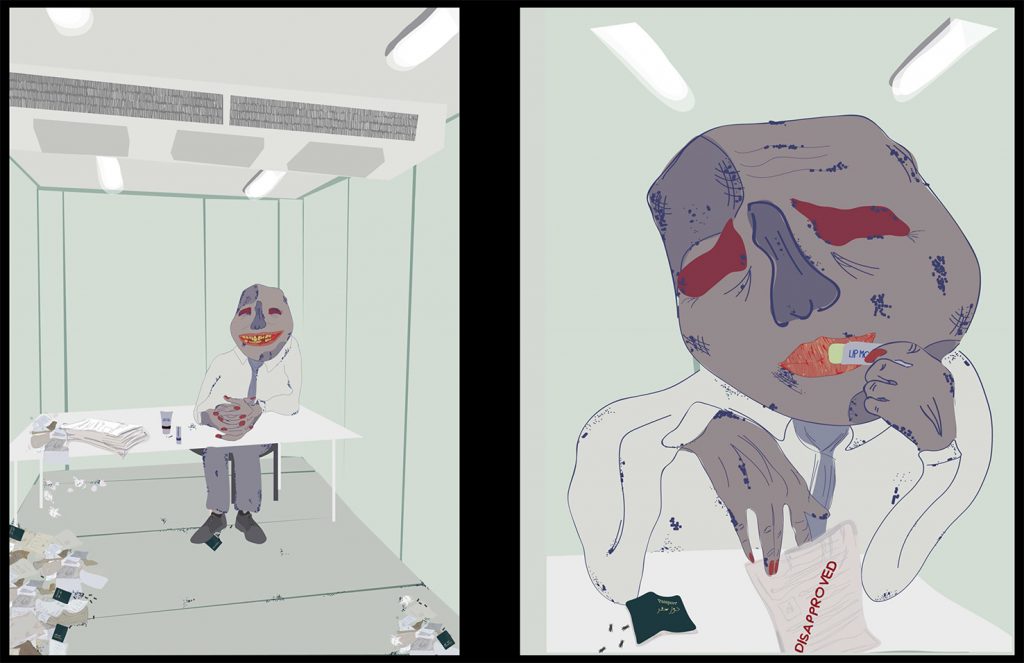
While coming from very different perspectives, both talks raised questions about how refugee and migrant experiences are framed and by whom. The discussion explored how these experiences might be represented more ethically and diversely. Speakers emphasised disrupting entrenched tropes through alternative narratives co-created with those who have lived experience, while avoiding defining people solely by their status. They noted that representation must also ensure safety, and that ethics is not a fixed rulebook but an ongoing conversation that requires reflection, difficult questions, and a willingness to change course.
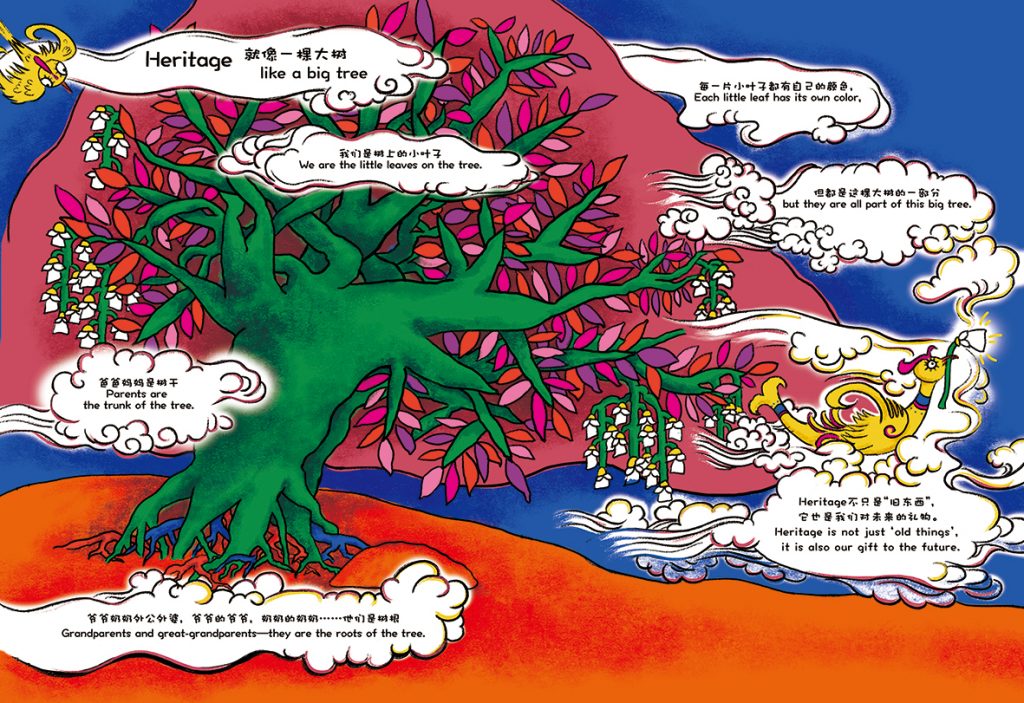
This emphasis on ethics and collaboration strongly resonated with my own research, where I work with Chinese immigrant families to co-create comics that convey migration stories from children’s perspectives. The speakers’ projects reminded me that representation is not only about visibility, but about finding authentic voices that challenge stereotypes, being honest with oneself, and responding sincerely to the people and issues that matter. Authenticity and sincerity give work its warmth and weight, grounding it in our shared humanity. True voices have power to move people, but they also need safe spaces where expression is possible and listening is genuine.
In my research, this means giving participants the chance to tell their own stories, with particular attention to children, without conforming to dominant narratives. What we need is not a singular “border spectacle,” but layered, textured, and multidimensional narratives. Such storytelling begins with mutual recognition: as researchers and participants, we must see each other as individuals with both limitations and unique richness. Artistic creation should not fabricate comforting narratives that contradict lived realities. For example, one speaker described a commissioned children’s comic where a friendly bear helps a deported raccoon return “home” to a joyful family welcome. For unaccompanied minors with no home to return to, such portrayals are a distorted imagination. Powerful work must be rooted in reality, starting from what is true, rather than embellishing conflict or suffering to fit mainstream emotions.
This event reaffirmed that the most powerful stories come from those who have lived them, serving not only as subjects but also as co-authors. Creating counter-narratives that address both the visible and the invisible is, I believe, essential to challenging the power structures embedded in representation.