
The Human Illustrator:
Reconfiguring roles in an age of technological change
Mon 22 June 2026 | 9:30 – 14:30 | Camberwell
Technological innovation is dramatically reconfiguring illustration practice and its industries, challenging established working relationships, patterns and methods. These technologies are offering us new ways to ideate, experiment with and generate visual material, but they are also increasingly able to replace our labour altogether.
This scenario presents a compelling opportunity for us to redefine and reassert the roles and responsibilities of human illustrators. How might we articulate what we are able to offer a project, a client, or society more generally? How might we advocate for ourselves as visual communicators? Might this scenario be an opportunity for us to broaden our remit? What could this entail?
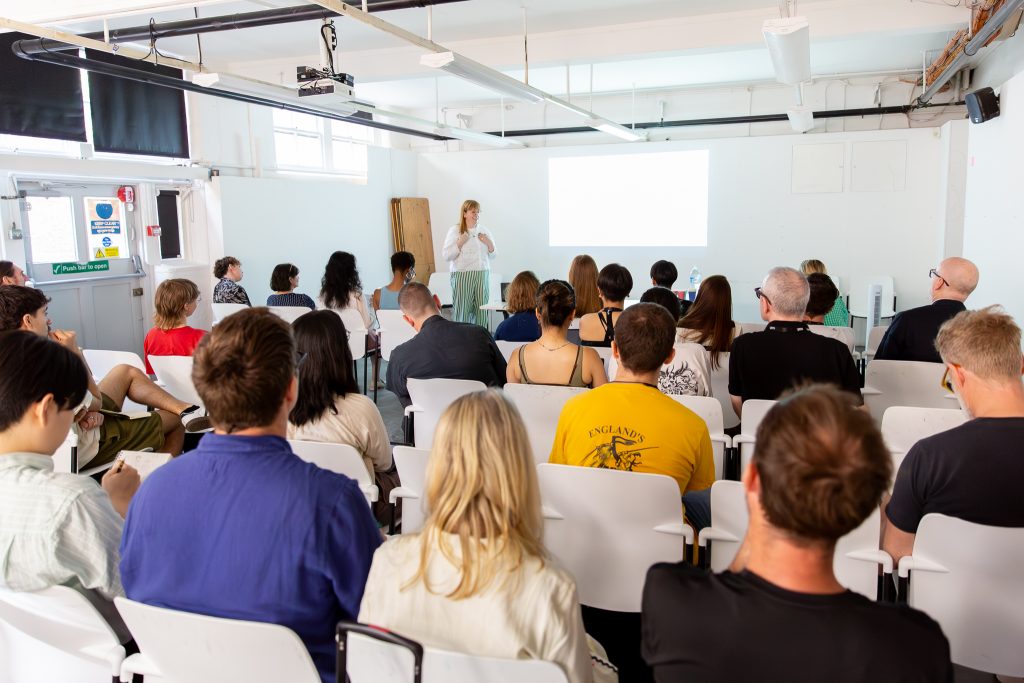
For this event ISH brought together 10 speakers across three panels who each presented a compelling proposition for the roles and responsibilities of human illustrators in an AI mediated environment. It was truly an illuminating and thought-provoking day. A huge thank you to all speakers, chairs and attendees who brought so many intriguing and inventive perspectives to these discussions!
(Scroll down for the presenters’ abstracts.)
Paul Laidler’s take on the day:
RELOCATING AGENCY
I was pleased to be able to attend The Human Illustrator symposium – the conversations around AI, authorship and uncertain presents have really stayed with me.
What struck me was how many of the presentations seemed to circle around questions of agency, collaboration and authorship, albeit from very different perspectives. Discussions around absence, uncertainty and the limits of computational systems sat alongside explorations of illustration as something that might extend beyond image-making into relationships with archives, technologies, materials, environments and more-than-human ways of thinking.
One thread that kept catching my attention was time. It surfaced in different forms throughout the day and connected with questions I’ve been wrestling with in my own research into generative AI. Increasingly, I’m finding myself less interested in what AI-generated images represent and more interested in how they come into being. What kinds of temporal processes are involved? What happens when making begins to look more like retrieval rather than emergence? And how might this shift the way we think about creativity, authorship and agency?
I also left wondering about the idea of decentring within these discussions. Several of the talks seemed to hint at agency being distributed across people, technologies, materials and environments rather than residing solely within the individual creator. Rather than seeing technological change as simply diminishing human agency, I wonder whether there is value in thinking about how agency is being relocated and reconfigured?
Thanks to all the speakers it has given me plenty to think about.
Dr Paul Laidler is Senior Lecturer in Illustration at UWE, Bristol
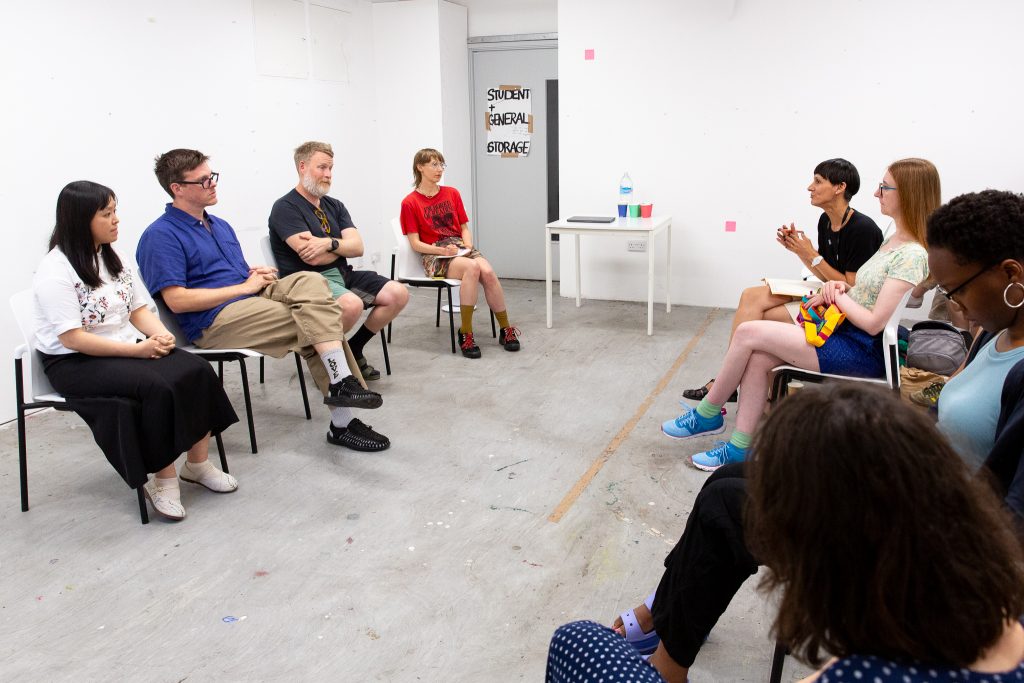
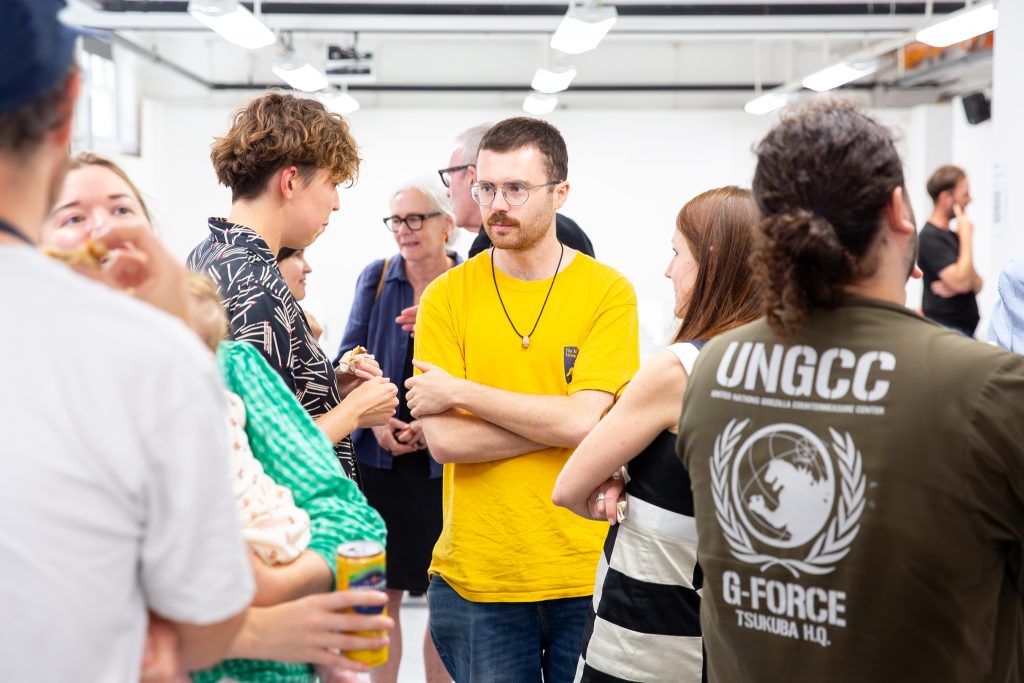
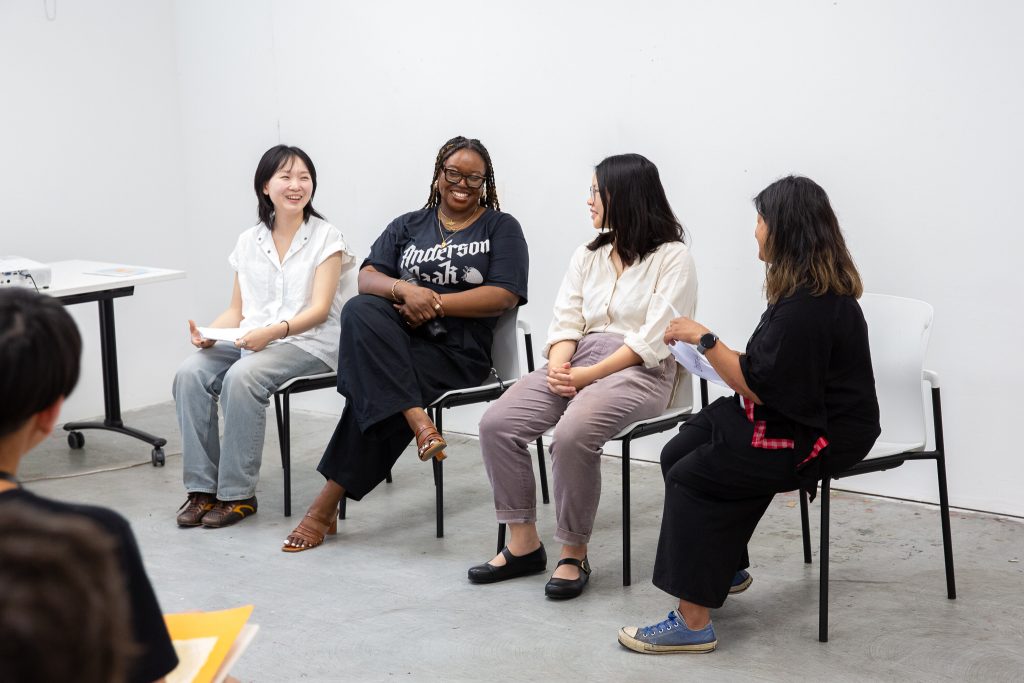
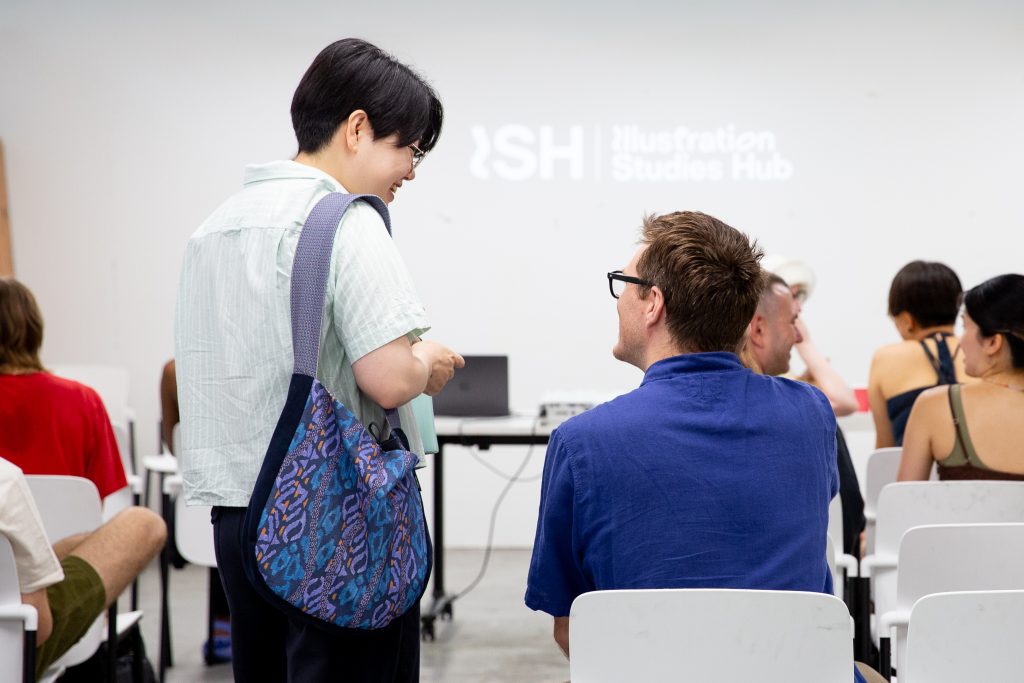
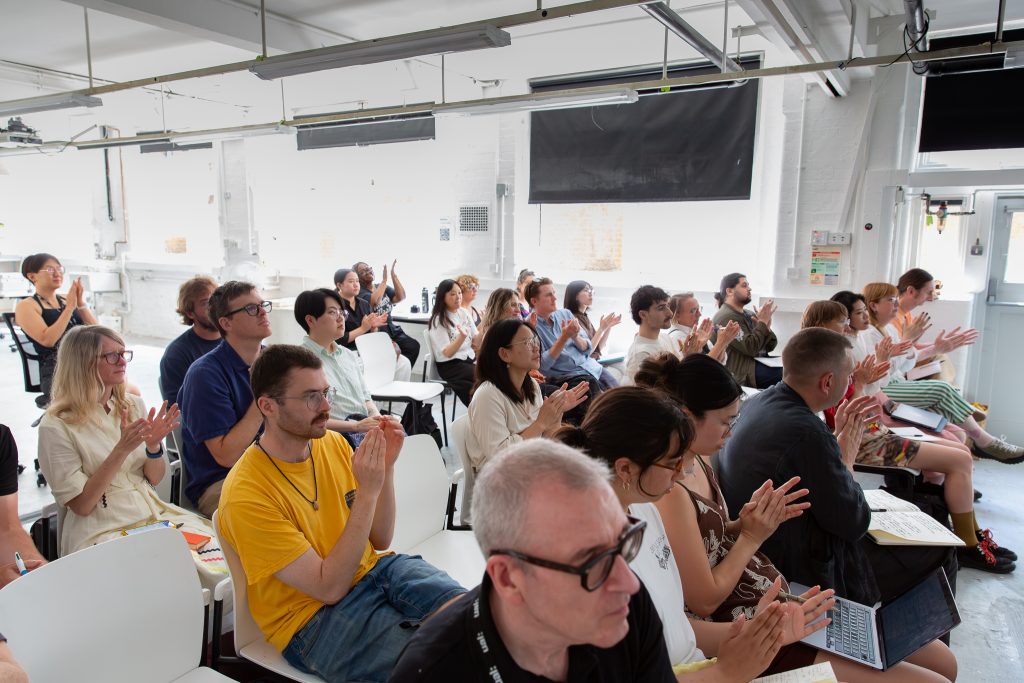
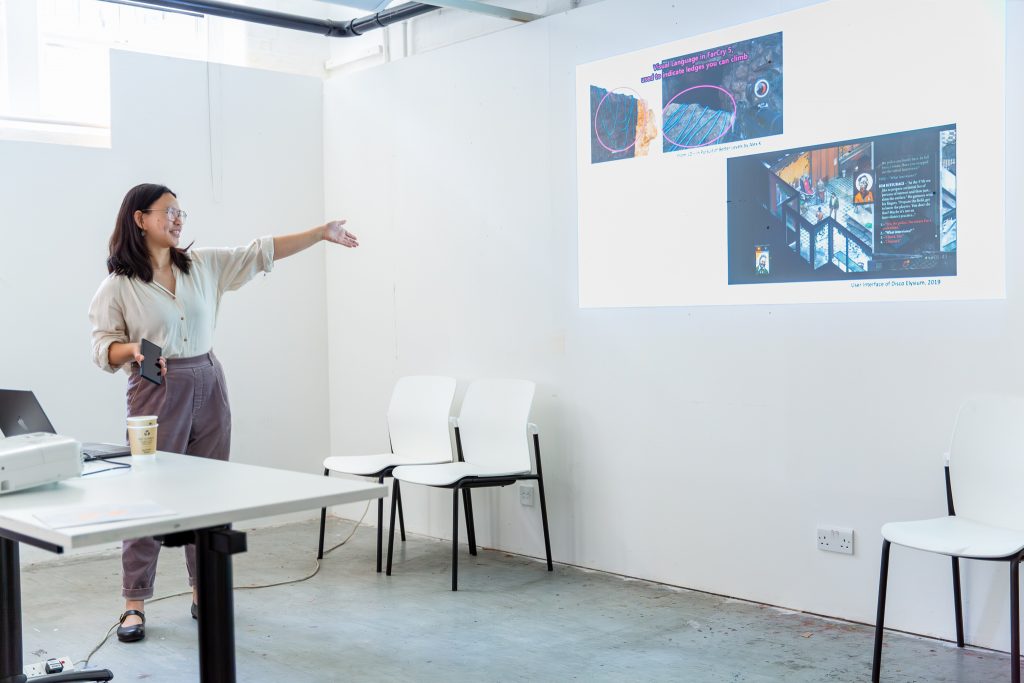
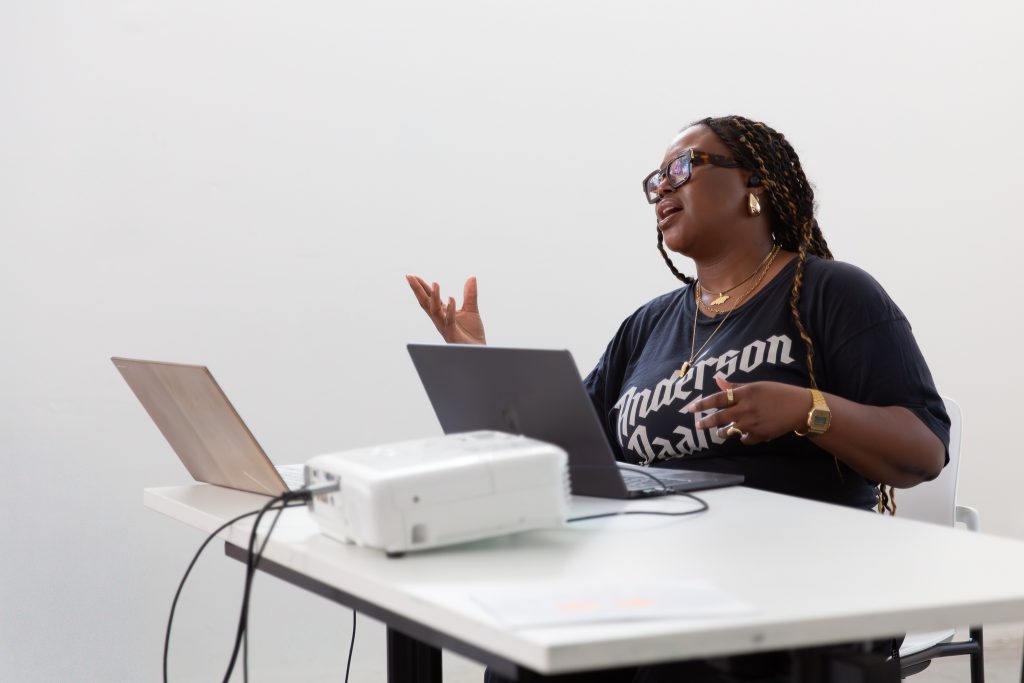
PHOTOS OF THE DAY:
Photography by Nerijus Malinauskas
ABSTRACTS:
Panel 1: PLACE
Chair: Haiqi Yang
Maisie Noble:
Chthonic Ones: Beings of the Earth
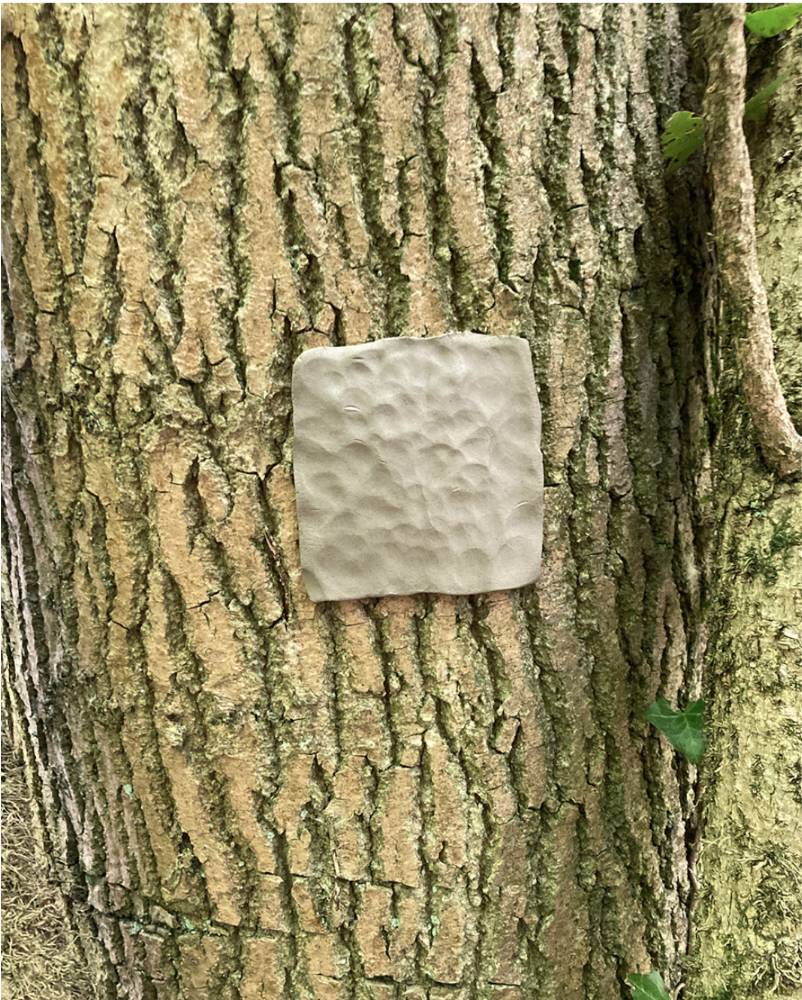
My research argues that the richness of place-based creative practices cannot be replicated by, or replaced with, outputs generated by digital non-human entities. The complex myriad of interactions between humanity and Mother Earth can only be fully explored by ‘feeling in-to-place’ (Cockcroft and Joy, 2025), and an essential component of this immersion is the body and its senses. Haraway writes that our practices are ‘situated, someplace and not noplace, entangled and worldly.’ (2016, p.4). Those with corporeal presence may seek to experience and make-sense-of human-earth interactions, be they gentle or monstrous. Haraway (2016) describes Cthonic ones as ‘beings of the earth’, her depiction of these gruesome critters is at once haunting and beautiful, foreboding and hopeful, akin to the human species in their complexity and influence.
In 2002 Kwon reflected that the ‘accelerated speed, access and exchange of information, images, commodities and bodies’ caused by the technological innovation of late-stage capitalism, runs concurrently to the ‘breakdown of traditional temporal-spatial experiences’. The rise of generative technology may further accelerate this breakdown as our attention is increasingly absorbed in virtual space instead of in the ‘rose garden’ (Odell; 2021). Illustration practice has the potential to shift this attention and to initiate, deepen and capture the embodied practices of communication with the Earth and her resources. My aim is to illuminate the impact of climate catastrophe on the human psyche, and the impact of human-nature on the Earth, while we are ‘living-with and dying-with each other potently’ (Haraway; 2016, p.2).
Logan Scott:
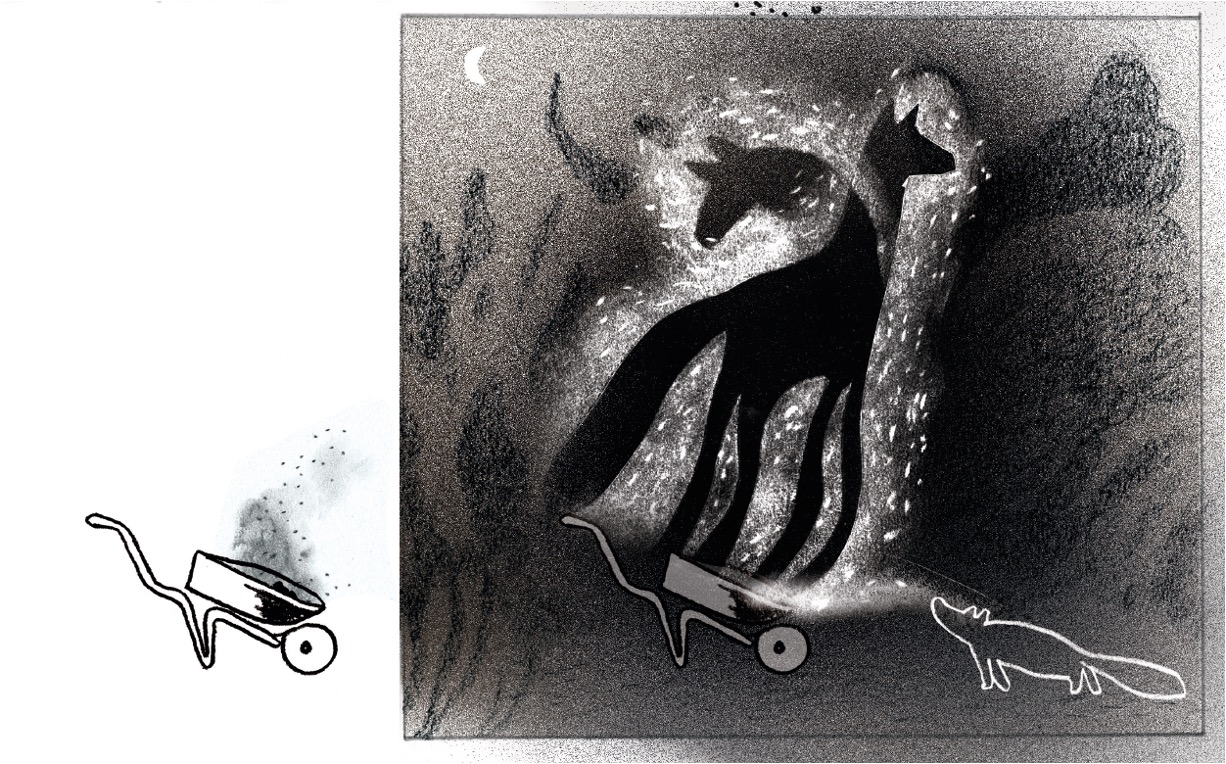
Holding Time: Sequential Drawing and More-than-Human Temporality
Recent developments in computational image generation are reshaping illustration around speed, efficiency, and automated output, often collapsing process into product. In this context, I propose a reemphasis on the role of the human illustrator as a practitioner working through time, attention, and relation.
This talk draws on my practice as a comics maker and researcher to explore sequential drawing as a method for engaging with forms of change that can be overlooked. Sequential drawing operates through return, adjustment, and accumulation, and requires the illustrator to sit within time and attention rather than collapsing process into output. It enables the registration of subtle, incremental, and often imperceptible transformations.
My work moves across photography, abstraction, and drawing. Starting from photographic material, I disrupt and rework images through digital processes and drawing, arranging them into non-linear sequences that engage more-than-human temporalities, including ecological processes and deep time. I extend this approach through repeat photography and drawing within all my work, including ongoing projects entitled Stillness as Resistance and The Bristlecone Pine.
The talk will present from these works to show how drawing can register environmental and temporal change that resists immediate visibility. Here, drawing becomes less about representation and more about sustained attention: tracing, circling, and responding to what cannot be fully resolved. I argue that this capacity, to work through time, engage uncertainty, and attend to more-than-human processes, defines a distinct and necessary role for the human illustrator within an increasingly automated visual culture.
Becky Moriarty:
The Experiment: An Unplanned Day Trip
I’m setting myself a challenge. What can we learn about a place through technology and what can we learn without? Let’s compare the findings.
The experiment: No phone maps, no googling, no Wikipedia…
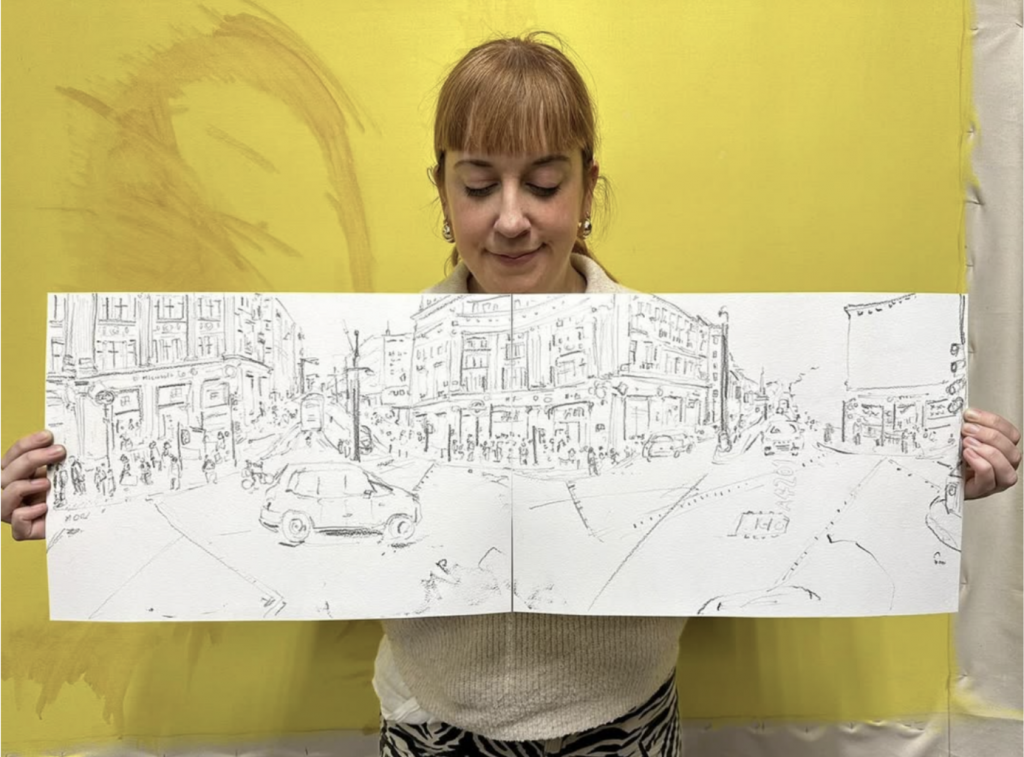
Walk to Liverpool St station and look at the departure destinations. Pick a place I’ve never heard of, buy a return train ticket and set off for the day. Walk around the destination and record visual fieldnotes of what I can see, hear, smell and feel. What are the people like? What type of buildings can I see? Is there a busy high street?
Once home and this part of the experiment has ended, I am then allowed to check the internet for information on the area (and perhaps if there was a better mode of transport to get there!) How do my personal findings differ from online? Is the internet able to give a more objective view? Is one better than the other? What can I offer as an Illustrator, that technology can not and vice versa?
Gabrielle Cariolle:
Gabrielle Tries to Become the Allotment Sorceress
This presentation builds on the findings of an ongoing practice-based enquiry into illustrating the more-than-human perspectives of an allotment garden. It examines the position of the illustrator and relate it to posthuman approaches to creative practice.
Building on Deleuze’s sorcerer figure and O’Sullivan’s Fictioning, the illustrator-researcher is considered as a techno-biological entanglement, positing her body as a site of becomings, with tools, technology and materials taking the role of catalysts and portals, enabling the conjuring of more-than-human worlds. What starts as a stylistic exercise in producing subjectivities eventually turns into an experiment in the summoning and visual crystallisation of other human and non-human experiences.
Entanglement however does not mean smooth alignment; stuff, tools and software are sometimes at odds with the illustrator. Technology appears inextricable from sensory experience and aesthetics in the literally and analytically messy process of making; control is rare while materials’ resistance is plenty. The illustrator often feels more apprentice than sorceress.
The process of what could be termed as illustrative fictioning is examined through drawings – standalone and sequential. Traces and materiality, narrative desires evidence speculation on more-than-human modes of existence, alliances and connections with what we are not, and the emergence of a different sense of the world.
Particular attention is given to the role of tools and their relationship to the human illustrator. How, in becoming animal, multiple or digital, her body finds ways to adjust and bind itself to temperamental materials and machines, in the enactment of new forms and fictions, manifesting other modes of being, other experiences and sensibilities, and other bodies.
No magic will be performed during the presentation.
Panel 2: METHOD
Chair: Esther McManus
Gareth Proskourine-Barnett:
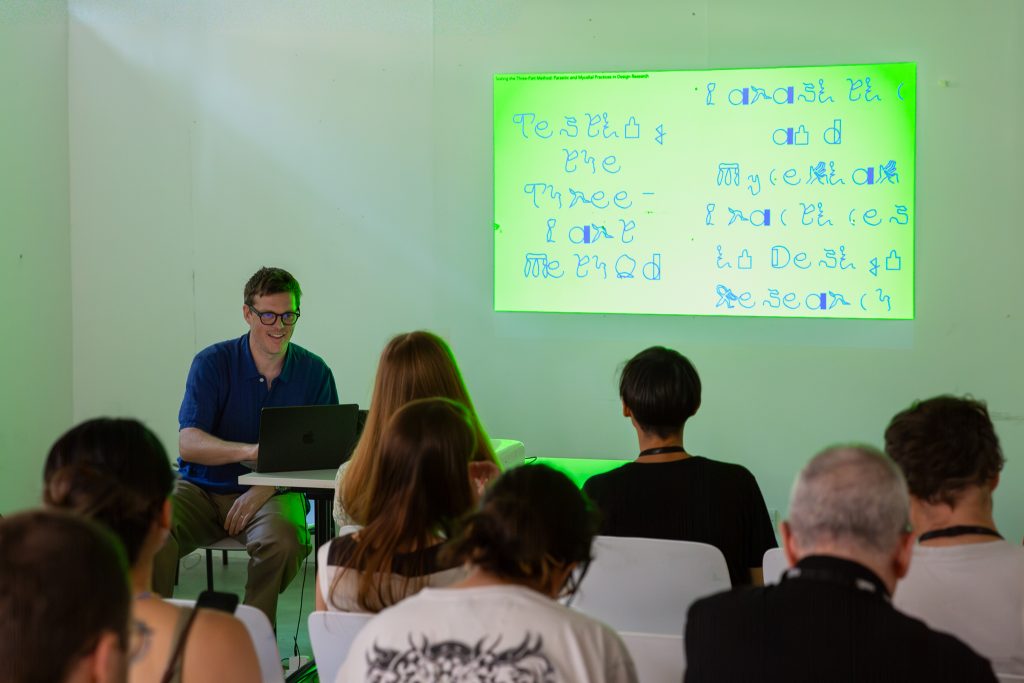
Testing the Three-Part Method: Parasitic and Mycelial Practices in Design Research
Drawing on research for my upcoming paper Rethinking Illustration as Method: Parasitic and Mycelial Practices in Design Research, the talk explores how illustration can operate trans-disciplinarily across research, pedagogy, and critical practice. The presentation introduces two conceptual models for this repositioning. First, parasitic practice, in which illustration attaches itself to existing systems, archives, institutions, or infrastructures in order to reveal their hidden logics and contradictions. Second, mycelial practice, which reframes illustration as a distributed, relational network sustained through collaboration, care, and long-term engagement rather than individual authorship or extractive production.
I will briefly outline a three-part orientational method structured around SITE, SCALE, and TOOLS. Rather than functioning as a fixed methodology, this framework enables illustrators to move across disciplinary contexts while maintaining a critical orientation toward the systems they inhabit. Within this model, illustration becomes less about producing images and more about organising relations between research, text, and visual thinking. In an era where automated systems increasingly replicate the surface qualities of illustration, this approach suggests that the distinctive contribution of the human illustrator lies not only in style, but in method, orientation, and ethical engagement with complex worlds.
Yiqi Zhang:
Grappling with Drawing Technologies in Practice-Led Research:
A Comics-Maker-Researcher-Illustrator’s Perspective
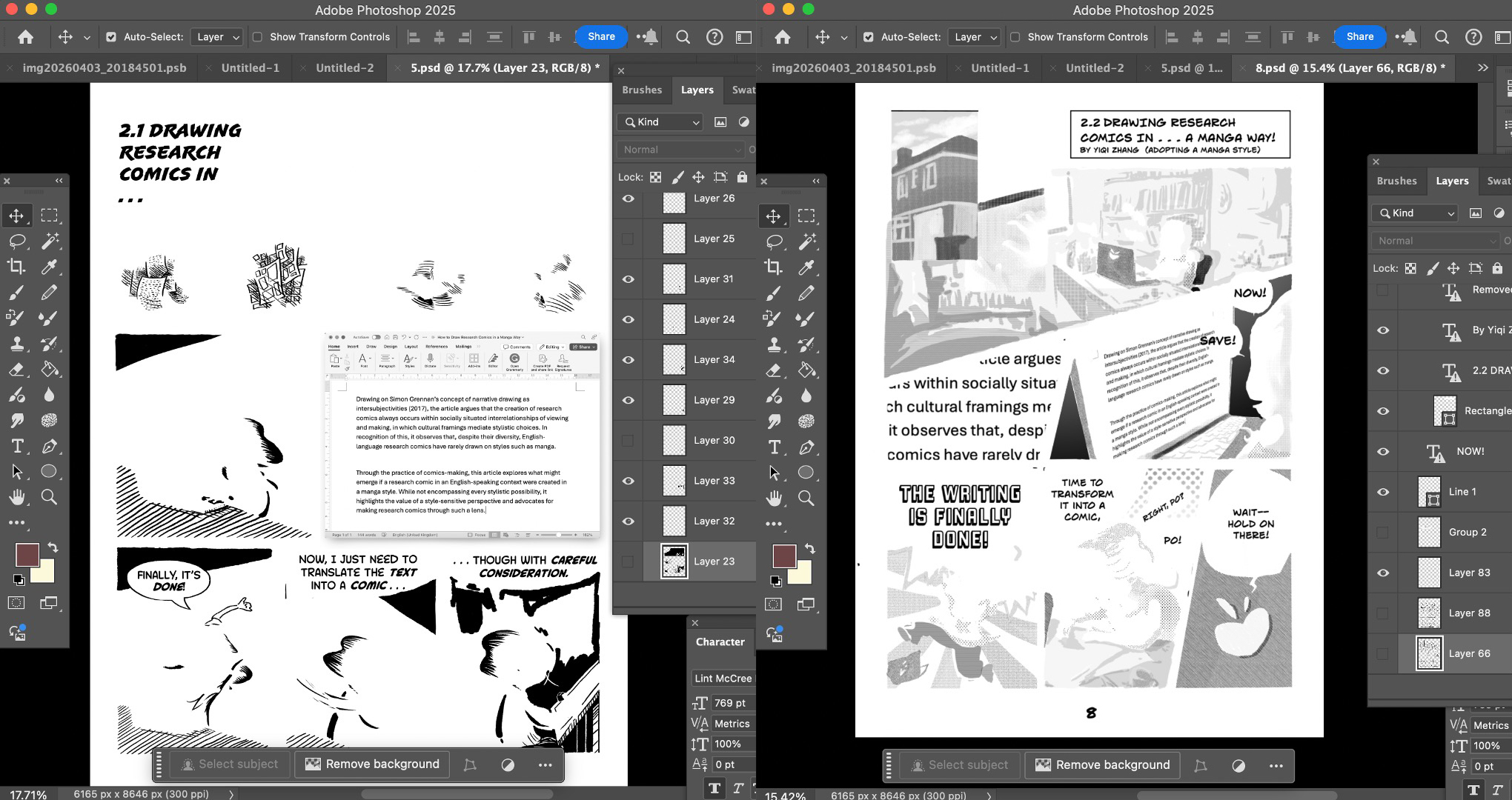
This presentation examines the complex role of drawing technologies, particularly digital tools such as Adobe Photoshop and Procreate, within my own practice-led research in comics studies and the study of transculturality (Abu-Er-Rub et al., 2019). Working as a comics-maker-researcher-illustrator, I use comics-making as research methods and understand digital drawing not only as representation, but also as a deliberate mode of academic enquiry and experimentation.
I argue that drawing technologies do more than simply enable practice-led research in a digital environment: they actively shape research processes, creative decisions, and the conceptual stance of the practitioner-researcher. I explore this by reflecting on three aspects of my own practice-led research projects.
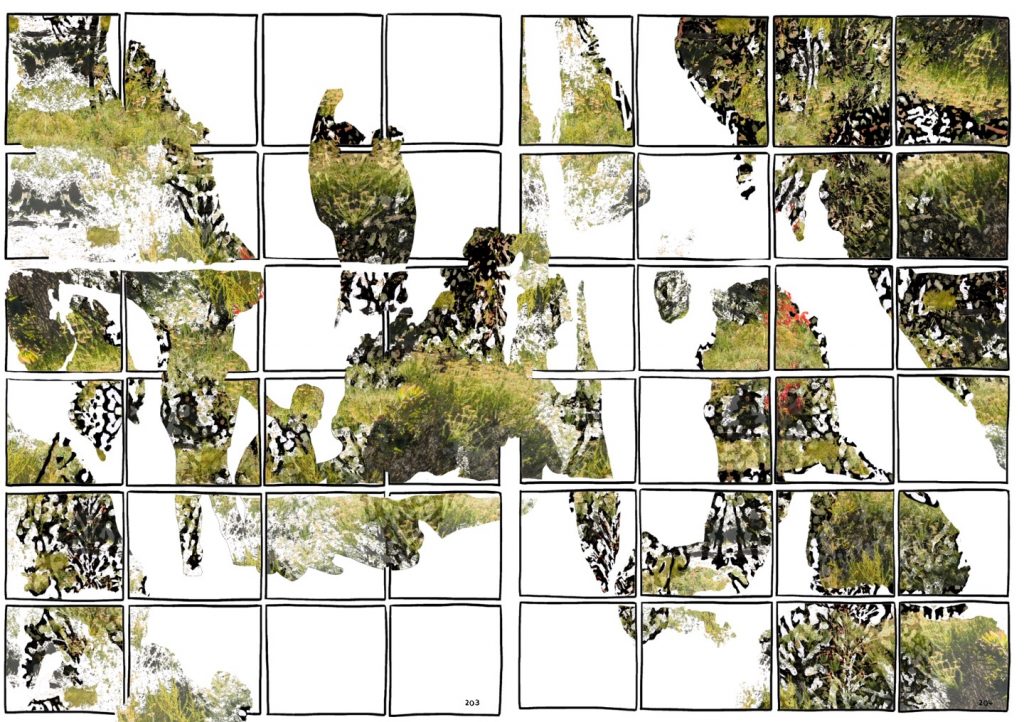
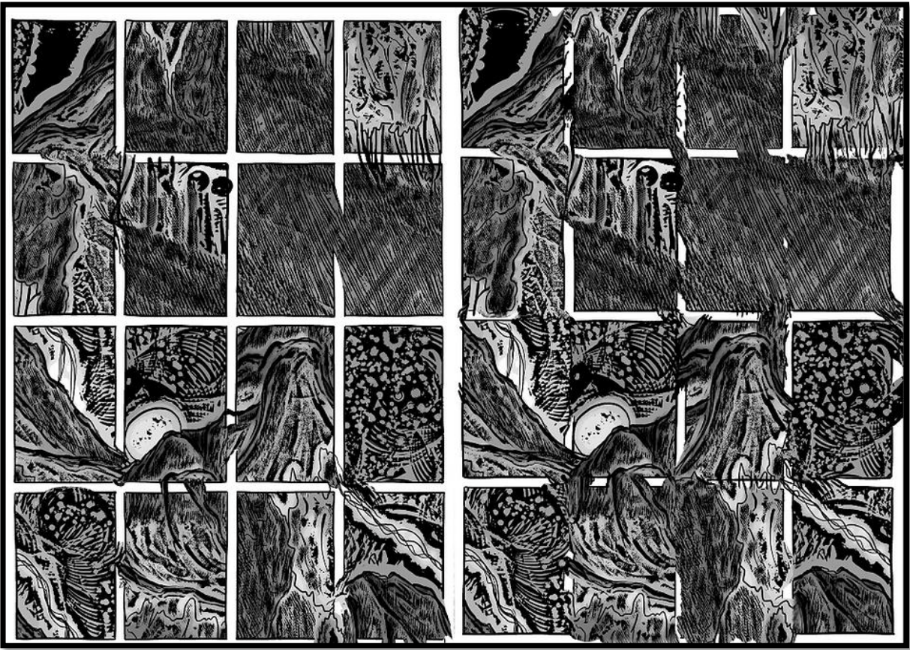
First, I consider characterisation, showing how digital brushes for inking and shading enabled the articulation of different graphic storytelling styles, thereby embedding stylistic comparison within the research output itself. Second, I examine concealment in a project that exposes the making process of an abstract comic (see figure below), asking how digital processes can both reveal and obscure the messiness of transcultural creative practice by erasing traces of revision more thoroughly than hand-drawing. This raises methodological questions about whether research insights reside in visible outcomes or partly hidden processes. Third, I argue that drawing technologies are themselves transcultural, facilitating movement across styles, tools, and visual traditions in contemporary global contexts, and thereby reshaping how knowledge production may be understood in practice-led scholarship.
This paper proposes a more critically self-aware understanding of drawing technologies as active agents within practice-led research.
Darryl Clifton:
Hot Oddities Now
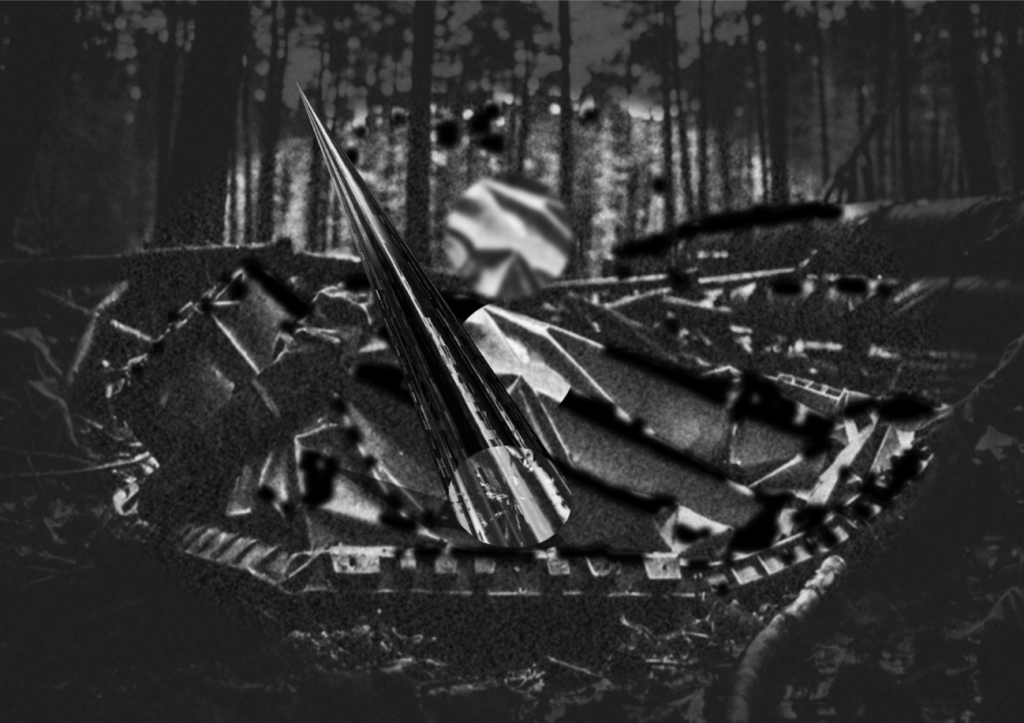
In 2024 I produced a small body of work for an equally small show that took place in Faversham, Kent. The work included a book (Hot Oddities Now) authored and illustrated in collaboration with a number of generative AIs. The decision to work in this way was twofold: curiosity and expediency. I have an abiding interest in the intersection of new/emerging technology and illustration and had a limited amount of time to produce something. The experience of working with/through a technology that I had no understanding of, other than how to engage with its UI, was akin to a form of delirium. However, it was only when I wrote the introduction to the book that I realised what I was observing, or sensing was the matter of interest for me and the basis for this proposal.
I will share the process, visual outputs, insights and speculations from the Hot Oddities Now project and attempt to examine this Illustration practice through N. Katherine Hayles’ notion of an Integrated Cognitive Framework (ICF) in an attempt to sketch out possibilities for meaningful co-creation or Human Computer (Creative) Interaction (HC((C))I). The discussion concerning the possibility of meaningful creative collaboration between Illustration practitioners and Artificial Intelligence models has become distorted. IMO there is a need to explore the latencies of interdependence in this regard and foster genuine inquiry that is both informed and radical in its approach with a view to reconfiguring roles in an age of technological change.
Panel 3: EXPERIENCE
Chair: Jhinuk Sarkar
Wei Ting Chia:
Games, Illustration and Playing for the Future
As AI tools increasingly automate visual production, articulating what is distinctively human about illustration practice becomes urgent. I argue that game design offers a particularly generative site for this articulation. It is a site that foregrounds the irreducibly human dimensions of visual thinking, relational making, and embodied speculation.
Drawing on C. Thi Nguyen’s Games: Agency as Art (2020) in which he argues that games are aesthetic experiences structured around the crafting and inhabiting of temporary agencies, and Cameron Kunzelman’s The World is Born From Zero (2023), which positions games as speculative spaces for reimagining reality, I will examine how illustration functions not merely as surface decoration in games but as a primary carrier of meaning, feeling, and possibility. The illustrator working in this context must make decisions that are deeply entangled with how a player will think, feel, and act. These decisions require a kind of visual intelligence that is responsive, relational, and interpretive in ways that generative AI currently cannot replicate, and which is often underestimated by even human game developers.
As a game designer and illustrator, my practice moves fluidly between interaction design and image-making: the two inform and generate each other. Through analysis of my own work alongside Nguyen and Kunzelman’s frameworks, I will demonstrate that the visual skills demanded by game illustration — crafting agency, sustaining ambiguity, and enabling speculation — offer a compelling model for reasserting the value of the human illustrator more broadly.
Amberlee Green:
The Intersectional Illustrator as a Multi-Disciplinary Tool: Drawing what we Know
In an era where technological change is rapidly reshaping creativity and the act of image-making, the value of the illustrator increasingly lies not in our capacity to interpret, situate, and care.
This session explores what it means to be a ‘human’ illustrator through the case study of an ongoing commissioned NHS maternity unit project: the creation of twelve large-scale illustrations for a hospital in Southwark + Westminster.
Positioning illustration as both a creative and relational practice, I argue that ‘human’ illustration is not only defined by hand-made aesthetics, but by the illustrator’s capacity to engage with complexity, lived experience, and interdisciplinarity. My approach to this project is deeply shaped by three intersecting identities and forms of expertise: as a Black person from South London with an embodied understanding of the nature/ politics/ identities of the geographic and demographic area the hospital serves; as a woman engaging critically with the realities of maternity spaces as sites of both joy and loss; and as a health sciences academic drawing on research in inequality, person-centred care, and critical pedagogy as a foundation to my illustration practice.
Using case study methodology, I will explore how these perspectives inform the research process, visual decision-making and narrative framing. This includes navigating tensions between institutional expectations and authentic community reflection, alongside designing imagery that holds space for multiple maternal experiences.
This session reframes the illustrator’s role as one grounded in situated knowledge, ethical sensitivity, and interdisciplinary insight, which will always be distinctly human qualities.
HyunJin Seo:
The Human Illustrator as Translator: Mediating Silence and Absence
I propose that the human illustrator is not merely an image-maker, but a translator of lived experience. While AI translates existing data, human illustrators possess a unique, subjective translation tool—one that is deeply personal, political, and shaped by cultural memory.
This presentation explores the illustrator’s role in navigating the “untranslatable” through a project centered on my family’s hidden history during the Japanese colonial period. My great-great-grandfather was an independence activist in Manchuria whose story remained officially unrecognised due to linguistic barriers (Classical Chinese and Japanese) and fragmented archives. While AI enabled me to translate over 300 recovered documents, it produced conflicting interpretations: a “hero” in Korean records and a “criminal” in Japanese ones. This moment revealed the limit of machine translation. AI can translate what exists, but not what is absent.
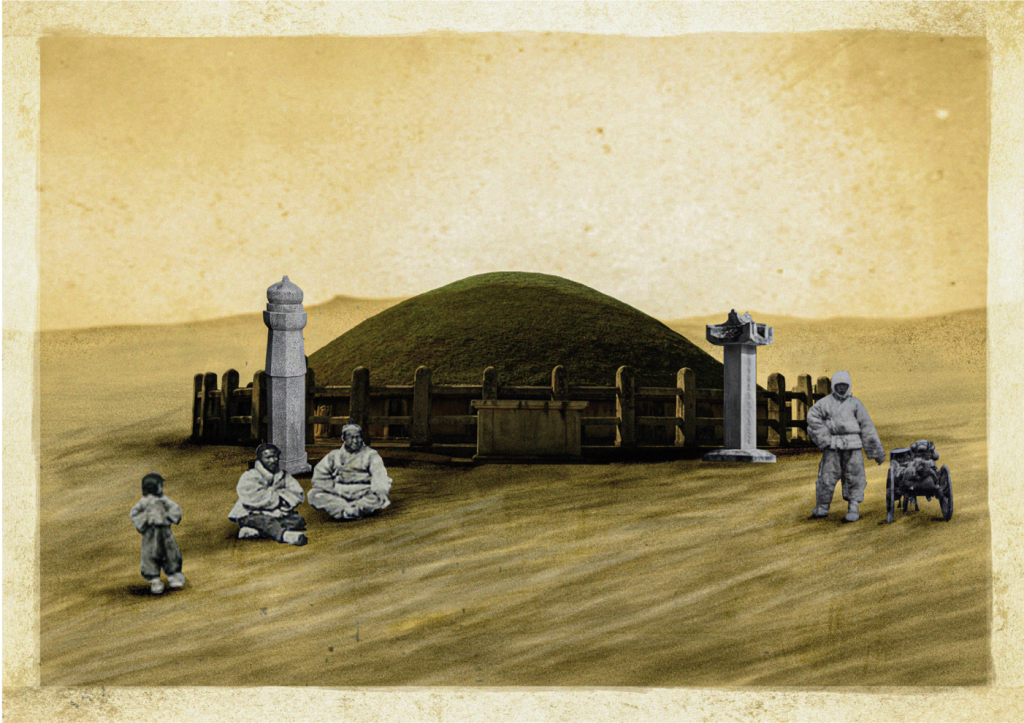
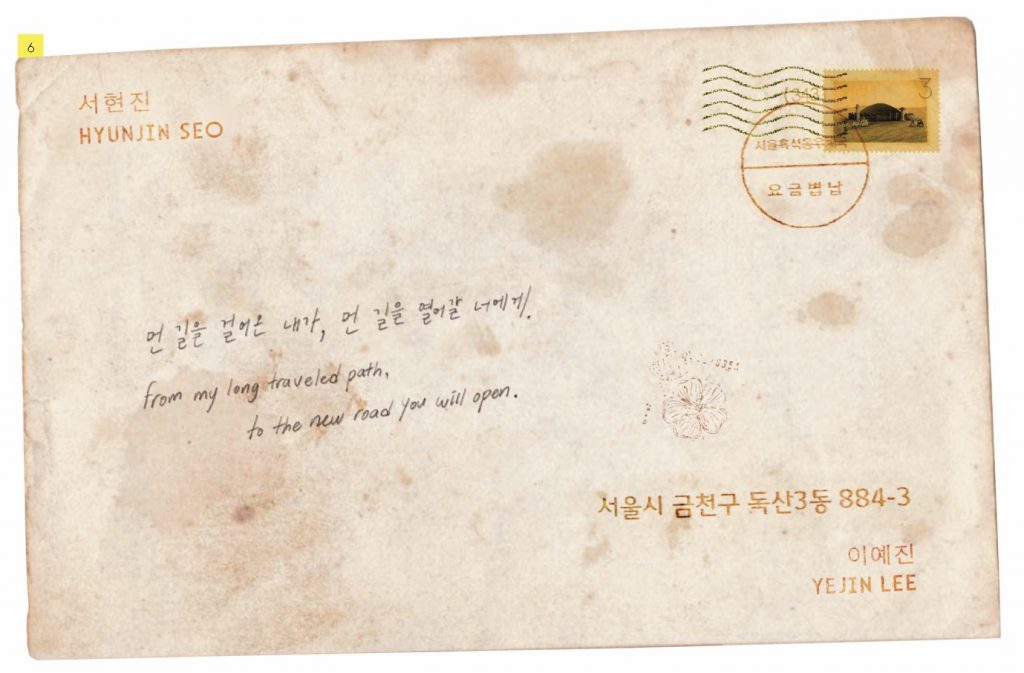
I argue that the human illustrator’s agency lies in translating absence. Through critical fabulation, I construct what cannot be verified: a lost diary, an unseen grave, and speculative archives that might have enabled historical recognition. These materials are brought together through a fictional curator, my future granddaughter “Yejin,” in the exhibition Eumgil (The Long Way Home)—transforming private memory into shared public history.
The human illustrator does not just process data; we select, interpret, and intervene. We offer a “personal-political” framework that transforms fragmented history into a multidimensional narrative. In an age of algorithmic certainty, the human illustrator’s role is to offer something more vital: the translation of what is missing.